WIDESPREAD rain events over the past two weeks appear to have staved-off any prospect of a reduction in direct consignment slaughter cattle prices due to heavy supply, with most rates across Eastern and southern Australia either firm, or in some cases 10c/kg higher than last week.
Just as cattle supply momentum started to build as paddocks looked increasingly dry through January, substantial if somewhat patchy rain across large parts of northern and Central Australia, and parts of Victoria and South Australia has seen supply-side pressure ease.
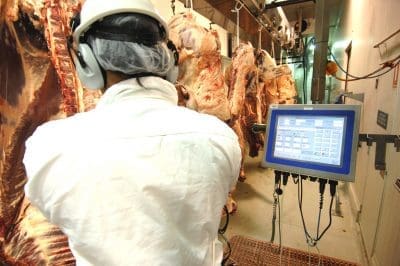 Another supply-side factor in Queensland kills in recent weeks has been some diversion of grainfed cattle, with managers electing to finish some programs early because of the impact of this year’s restrictive China quota.
According to several grainfed supply chains, there are midfed-type cattle currently only part-way through their programs that are being brought forward for earlier kills, in order to make delivery to customers in China before the quota triggers (likely April or May), and 55pc tariffs apply. That early turnoff pressure could last two or three months, one contact said.
In some cases, this is pushing-back demand a little for grass slaughter cattle from week-to-week, where timing is less important, Beef Central was told.
In crude terms, a chilled 40-foot container of Wagyu or midfed Angus cuts might be worth the best part of $1 million. Add China’s new Safeguard tariff on top, and that means the same container costs the importer $1.55 million for the remainder of this year.
Weather challenges
Processors across a wide area of eastern and southern Australia are experiencing some supply challenges due to weather-related road and paddock access this week, but apart from a couple of sites in Central and North Queensland, none are yet planning to drop working days due to shortage, feedback suggests.
Large areas of cattle country around Clermont, Alpha and north to Charters Towers are now very wet.
Recent weather will underpin a strong season heading into winter in many extensive northern cattle areas, including the Barkly Tableland region (registrations of up to 550mm on Lake Nash and great rain at Alroy), Queensland’s Gulf Country and elsewhere.
The rain may delay the start of the northern cattle turnoff somewhat, one processor livestock manager suggested, with cattle that might normally start arriving after Easter now likely to be held back until May or June.
“Nobody will be doing anything for the next couple of months on those places that have received really big rain,” one meatworks buyer said. He suggested cattle heading south out of the bottom half of the NT and northern parts of SA for processing in Victoria might be impacted worst of all.
“But as soon as we see country starting to dry out again, it’s looking like there will be plenty of cattle about in the northern half of the country.”
New England misses out, badly
In sharp contrast with those areas that have received excellent recent rain, the New England region is now looking increasingly desperate for moisture, with large runs of quality local breeding cows appearing in saleyards this week. Evidence of this was 6100 yarded at Gunnedah yesterday and 4400 at Inverell. A single vendor was offering 700 cows at Gunnedah yesterday, but many were light in condition and were going mainly to Victorian processors.
Queensland grids steady
There is little or no sign of changes in Queensland slaughter grids this week, with tighter supplies due to weather and paddock conditions underpinning current rates.
Some large export processors continue to offer only unpriced kill slots (currently working on weeks of March 15 and 22), with prices negotiated closer to slaughter date.
Others have active quotes out this week for kills in southern Queensland with good quality heavy cows this morning at 750c/kg and heavy grassfed ox four teeth at 830c/kg (10c more available on some grids for no HGP).
Central Queensland plants are 10-20c behind those southern Queensland rates.
Southern states
Some direct consignment offers in southern states have lifted 10c this week, with weather-related supply issues evident for some operators. In one case it was disrupting access to Certified Organic cattle for specialist programs out of Central Australia, but in most cases, buyers were able to back-fill lost direct consignment bookings with a few extra saleyards cattle. That’s lifted rates for saleyards slaughter cattle in the region by 5-20c/kg in places.
A big rain band went through an area north of Port Augusta to Broken Hill, and north of Mildura all the way to Wodonga, where falls of 112mm were recorded on Sunday.
A southern NSW export plant was this morning offering 830c/kg on no-HGP four tooth grass ox, and 750c/kg on best cows.
Export processors in eastern parts of South Australia were showing 850-860c/kg and 800c/kg on steers and cows this morning, respectively.Angus MSA steer 0-4 teeth in one SA grid showed 880c/kg this week, with MSA Angus cow 780c/kg; Non Angus, less 20c.
A few larger, more attractive consignments are attracting some bonus offers, perhaps 10c/kg, but much of that is weather supply related.
Some southern feeder price grids have shown a lift this week, rising 10c/kg to 500c/kg for Angus steers delivered eastern South Australia.
Already there are signs of southern processors pressing north to secure slaughter cattle again, just as they did for long periods last year. Most of that activity has been via the paddock, reports suggest, although a number of southern buyers were active at Gunnedah sale today.
Saleyards trends
Saleyard yardings have been erratic this week, with larger numbers especially in parts of NSW where conditions remain dry, while in other areas rain has had an impact. The fortnightly Blackall sale this week has been cancelled.
Gunnedah’s offering jumped by almost 1000 this morning for a yarding of 5800. Ii was a much plainer quality yarding with large numbers of secondary cows along with their young calves which were mostly in store condition. The few grown steers were firm; the grown heifers were 12c dearer. Prime grown steers sold to 417c while the prime grown heifers sold from 388-332c/kg. Secondary cows were 10c to 20c dearer while the heavyweights were 5c/kg dearer. Score 2 and 3 cows sold from 260c to 361c/kg. Prime heavy weights sold from 355-383c to average 371c/kg.
Rain in the forecast impacted supply and numbers dropped significantly at Wagga yesterday, where 5000 head were yarded. The overall quality remained secondary, with trade and export cattle limited. On the export side, suitable steers were limited. Heavy steers and bullocks sold from 410–482c/kg, while heavy heifers with shape sold from 410-475c/kg. Declining heavy cow supply pushed prices higher, led by southern exporters. Heavy cows lifted 10c to range from 372–425c, with leaner cows less than 520kg in strong demand and the better covered made from 318–385c/kg.