With January’s floods, fires and record temperatures now passed, the slaughter cattle market is beginning to provide more definition for the start of the year in some parts of the country.
The general view is that there will be plenty of killable cattle around over the next couple of months, especially with a few consignments delayed from earlier weeks still to pass through the system.
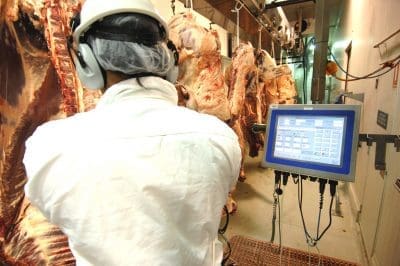 In Queensland, some large export processing businesses are yet to offer formal quotes, having already booked numbers of cattle forward on an unpriced kill slots basis, for kills through to week starting 23 February.
Other Queensland operators have left grids unchanged this week, having lowered quotes by 20c/kg last week across both grass steers and cows, in the face of solid early cattle supply.
Best quotes seen this morning in southern Queensland were 810c/kg on four tooth grass ox (820c/kg for HGP-free on some grids) and 730c/kg on good quality heavy cows.
Plants in Central and Northern parts of Queensland are still struggling to raise kills this week due to local logistics problems, with cattle from further away in southern parts of the state continuing to be shipped to fill holes in rosters.
Some over the hooks grids in Central Queensland – typically 10-20c behind operators in southern Queensland – are pretty much on par this week due to local challenges caused by road and paddock conditions.
Some 10c reductions in direct consignment cattle were also seen in southern states last week, but most rates appear unchanged this week.
A southern NSW export plant was this morning offering 820c/kg on no-HGP four tooth grass ox, and 740c/kg on best cows; while operators in eastern parts of South Australia were still showing 840c/kg and 790c/kg on steers and cows, respectively.
Smaller kills last week
Last week’s Australia Day holiday limited processing activity to four days, pushing the adult cattle tally for the week ended Friday down by almost 18,000 head on the previous week to 124,662 head.
National year-to-date slaughter to Friday reached 556,000 head, about 4pc higher than the same period last year.
Saleyards numbers grow, following record heat
There was a general rise in saleyard numbers early this week, as cattle held over due to record temperatures last week are brought to market.
Gunnedah yarded 3500 this morning, up almost 1000 on last week. There was a good run of cows with most having plenty of weight and yield. Young cattle to restockers and feeders were firm but prime grown steers and heifers were softer. Cows also sold to weaker trend. The limited supply of prime grown steers ranged from 400-452c, and the heavy grown heifers received 390-438c/kg. Cows lost 5c with the prime heavyweights selling from 364-388c and the lighter score 2s and 3s 336-368c/kg.
Naracoorte yarded 1542 this morning, up 436 on the previous sale a fortnight ago (last week cancelled due to heat). Prices were similar to the last sale held on January 20. The cow market was softer again by 5-8c/kg with only one pen of heavy beef cows selling above 400c to a top of 405c/kg. Any grown steers with weight and some carcase shape were reasonably well supported and were dearer in places to a peak of 475c/kg. The grown steer run did have a consistent price floor of 450c to a top of 475c for the better bred and conditioned types. The cow market also held a constant rate of 370-395c/kg across the bulk of the beef pens that had weight and fresh cover.
Wodonga yarded 1800 this morning, up 30pc on last week. Most of the usual buyers attended and only a couple of buyers operated in the export run for heavy steers and bullocks. Heavy cattle were in limited numbers and quality was quite good. Demand from domestic and export processors was erratic throughout the sale. Heavy steers and bullocks sold to weaker competition with heavy steers 12c cheaper making from 388-460c/kg. Bullocks were limited and competition was patchy with prices dipping 37c making from 390-485c/kg. Heavy cows were well supplied and most buyers operated but were not prepared to push the market. The bulk of the better heavy cows slipping 11c making from 360-392c/kg. Leaner cows D3 types under 520kg were mixed selling from 320-356c/kg.
Roma was still in progress as this report was compiled, offering 6852 head this morning, down 10pc on last week. Prices generally stabilised following the reductions experienced the previous week. Heavy grown steers to export processors made to 476c to average 458c/kg. Full report tomorrow.