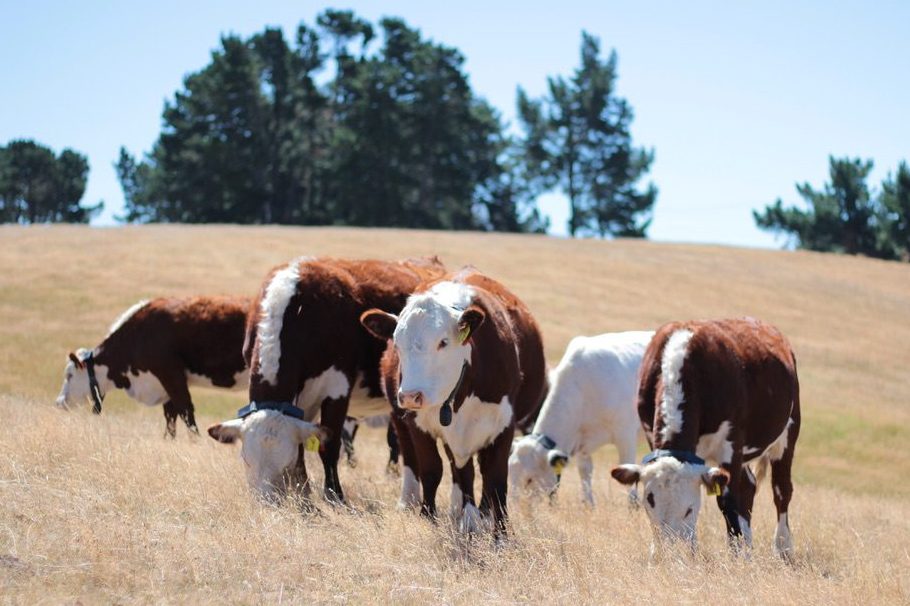
Supplied: Halter
VICTORIAN cattle producers can now access virtual fencing with one product approved for commercial use, following a change to the state’s laws in December.
Victoria, New South Wales and South Australia approved the technology last year bringing the states in line with policies in Queensland, Tasmania, Western Australia and the Northern Territory.
Minister for Agriculture Ros Spence announced that the Halter’s P5 electronic collar system is the first to be approved in Victoria for virtual fencing.
 “This technology will help farmers to save on the cost of building and maintaining cattle fencing through smart, real-time technology,” Minister Spence said.
“We’ve heard from many farmers using various forms of virtual fencing, and it was clear that the technology made a significant difference to the health of their stock, their pastures and their workloads.”
Halter’s P5 system features a collar connected to an app, allowing farmers to virtually fence, move and monitor the wellbeing of their cows while receiving real-time insights into animal health and pasture conditions.
Farmers can virtually fence around waterways and sensitive land or vegetation, while still allowing native animals to access them, promoting faster pasture recovery, healthier riparian zones and reduced reliance on fertiliser.
“This is an exciting day for Victorian farmers, who can now access world-leading virtual fencing and herding technology for dairy and beef,” CEO and Founder of Halter, Craig Piggott said.
The technology has been approved following rigorous animal welfare testing at the Ellinbank SmartFarm.
“This will create over 70 new jobs, working directly with cattle farmers to install this technology,” Minister Spence said.
Approvals are reliant on accurate record keeping and reporting, use of approved technology, training provided by the manufacturer, maintaining physical boundary fences or barriers and ensuring collars are checked regularly.
This technology is now available for purchase, with other Victorian manufacturers encouraged to apply so that more virtual fencing technology can be approved. A second application is currently being considered.
Electronic collars for livestock species other than cattle can only be used when a scientific licence has been granted under the POCTA Act, and the use is approved by an Animal Ethics Committees.