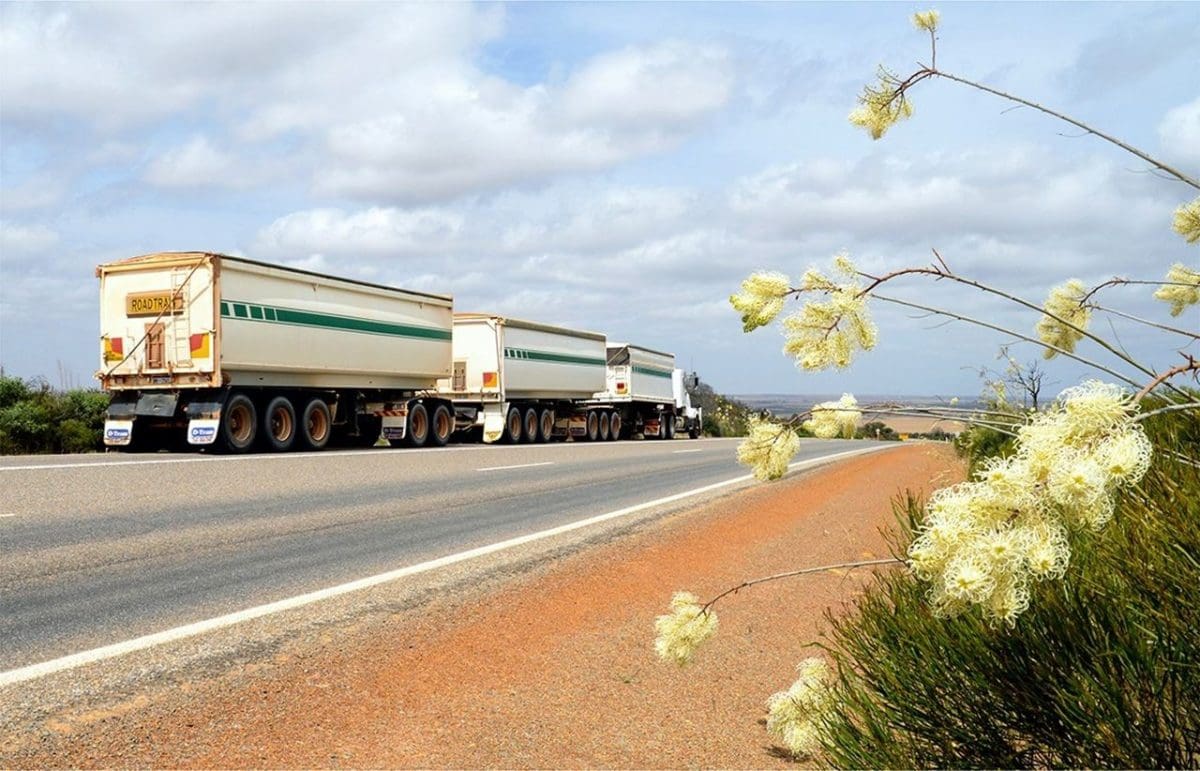
FARMERS will not be eligible for zero-interest loans under an expanded Economic Resilience Program, but businesses transporting “value-added products” will be eligible, the Federal Government has confirmed.
The office of the Minister for Industry and Innovation Tim Ayres has told Sheep Central the ERP has been expanded to include manufacturing and logistics businesses across critical supply chains such as fertilisers and agricultural protection chemicals, as well as fuel production, fuel additives, fuel derivatives and storage – including low‑carbon fuels.
“As such, it does include the transport of value-added products,” a spokesperson said.
The office said farmers are not directly eligible, “but the ERP complements the work the government is doing to shield Australia’s farmers and producers from the worst impacts of the conflict in the Middle East through deferral of the phased transition to full cost recovery for export regulatory services, the creation of the Fertiliser Supply Working Group, and providing ongoing hardship support through the Farm Household Allowance, Farm Management Deposits and Rural Financial Counselling.”
On April 2, the Federal Government said it would bring forward $6.15 billion in concessional capital to support Australian businesses affected by global disruptions.
The government said accelerated delivery of funds will help protect local manufacturing and supply chain businesses from market disruptions, and support investments in increased production capability, capacity and decarbonisation efforts.
The $1B Economic Resilience Program, $5B Net Zero Fund, and $150 million in concessional finance under the Forestry Growth Fund will open shortly to provide a greater scope of support and concessional finance to Australian businesses.
The ERP interest loans will help keep our trucks, trains and planes moving, and our critical production activities online when we need them most, the government said.
Prime Minister Anthony Albanese said the ERP is about investing in more production for fuel, fertiliser and logistics.
“We are serious about backing Australian jobs, businesses and industries. And today we are taking action to get this money flowing well ahead of schedule,” Mr Albanese said.
Mr Ayres said by bringing forward $6.15B in capital, the National Reconstruction Fund can more quickly support businesses to increase production, capability and capacity.
“This will help them to navigate global supply chain disruption and make sure Australia has more of the things it needs.”
ERP applications open later this month
The Ayres office spokesperson said the ERP program is expected to open for applications later this month and will provide loans to key supply chains that directly support farmers including fuel, fertiliser and agricultural protection chemicals.
“Stabilising the costs across these supply chains should see the benefits flow through to farmers on the ground.”
Sheep Central was told the ERP is administered by the National Reconstruction Fund Corporation and the ERP webpage is now live.
Businesses are able to register their interest in the ERP, including details on their request for support; however full eligibility criteria is not available.
The ERP program is expected to open for formal applications by the middle of this month and to ensure expedited access to financial support, the delivery of ERP loans will be administered by participating Australian banks.
Support, including finance for larger investments, may also be available directly from the NRFC, Minister Ayres’ office advised.
Coalition calls for inclusion of farmers
The Coalition last week called for the Albanese Government to release the details of its plan to provide interest-free loans to businesses impacted by the fuel crisis and add the agricultural sector to the program.
Shadow Minister for Industry and Sovereign Capability Andrew Hastie said called on the government to confirm whether farmers were covered by the loan scheme and, if not, to urgently extend it to include them.
“Labor’s interest-free loan package is meant to support businesses, but it’s still unclear if farmers, dealing with skyrocketing fuel and fertiliser costs, are included,” Mr Hastie said.
“Australian farmers are already doing it tough, and it’s only getting worse.
“They are paying more to run their machinery and more for the inputs that grow our food, but unlike others in the supply chain they have no way to pass these costs on,” he said.
“They just have to absorb it.
“At a time when Australia’s food producers are under pressure, leaving them out of a crisis support program is a serious oversight.
“If the government is serious about backing Australian industry and protecting supply, it needs to act quickly and ensure farmers are included,” Mr Hastie said.
Shadow Minister for Agriculture, Fisheries and Forestry Darren Chester said the government had failed to provide any details on the program and the eligibility criteria.
“There’s a crisis now and we have the government floating thought bubbles without any details on how the program will be implemented and whether one of the most adversely impacted industries will have access to interest-free loans,” Mr Chester said.
“As it stands right now, it appears that farmers and agri-businesses have missed out completely under this scheme.
“Key industry groups are already warning that further disruptions to fuel and fertiliser supplies could lead to shortages and higher prices for Australian families and the agricultural sector can’t keep absorbing all the extra costs.
“Labor should be doing everything it can to ensure our agriculture industry is protected from more shocks during this crisis. Mr Chester said the increasingly uncertain global environment had also strengthened the case to fast-track a National Food Security Strategy and elevate food and fibre security as a matter of national importance.
Rural transporters waiting for guidelines
Australian Livestock and Rural Transporters Association executive director Anthony Boyle said he has been led to believe by the Australian Tax Office that transport businesses would be part of the focus of the expanded ERP, but he was still waiting on program details.
“I’m still waiting to find out more about it.
“There isn’t a true release, but we were told there is more coming.”
Mr Boyle said transporters were eligible for the Australian Tax Office fuel response payment plan, available until 30 June 2026, that offers tailored support for ABN holders struggling with tax debts due to high fuel prices.
Eligible businesses can get up to three years to repay debt, no upfront payments, and potential interest/penalty relief.
He said the Australian Banking Association offer of deferred finance payments was also appreciated.
It included an interest component, but would help transporters carrying debt to keep operating and manage the increased fuel costs.
“Because suddenly a $200,000 credit limit for diesel allows to buy half as much diesel, so you’ve got to start paying for the fuel before you got paid for the job.
“It helps us keep afloat and keep our cashflow right.”