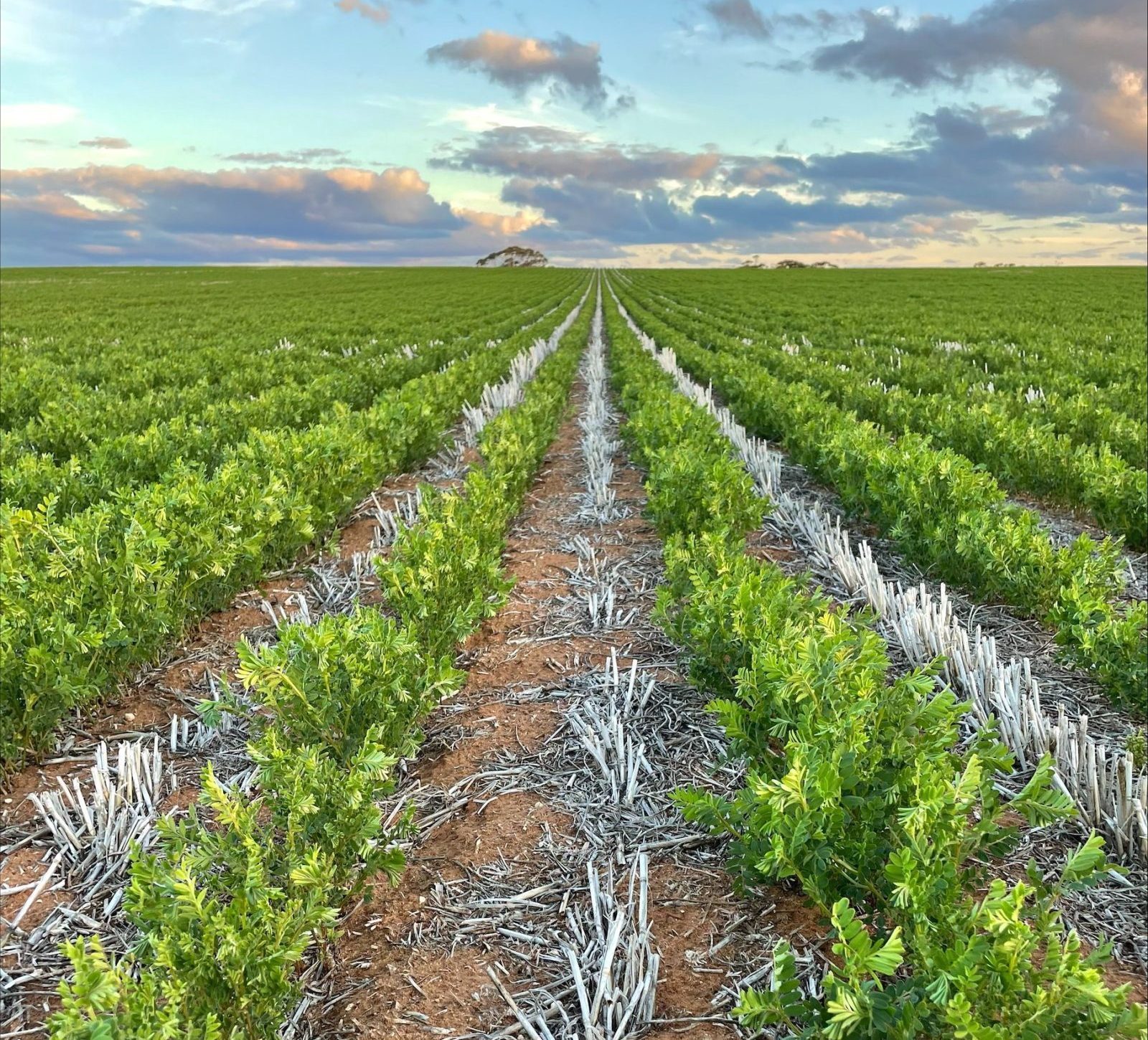
A thriving crop of lentils photographed in Nandaly in the Victorian Mallee in July 2025. If Syngenta is successful in its APVMA application, its new selective herbicide will be available to control grassweeds in pulses and other broadleafs. Photo: Crop Smart
SYNGENTA has this week launched what it says is the world’s first selective herbicide to control resistant grass weeds in broadleafs including soybeans, cotton and pulses.
Using the metproxybicyclone and marketed as Virestina, Argentina has become the world’s first jurisdiction to approve the technology.
Syngenta hopes to release the product in Brazil, the US, Canada, and Australia.
“Virestina technology will provide Australian grain producers with another tool to manage grass weeds in a range of crops,” Syngenta product lead for herbicides Owen Langley said.

Syngenta Australia’s Owen Langley.
“Syngenta Australia is continuing to evaluate Virestina for use in a range of pulse crops.”
Mr Langley said work is ongoing to determine which crops and weeds are most suitable for use with Virestina.
“It will simplify grower decision-making by seamlessly integrating with existing herbicide programs to deliver a sustainable resistance-management solution.”
The Australian Pesticides and Veterinary Medicines Authority’s Public Chemicals Registration Information System database does not yet list metproxybicyclone.
“Virestina is not yet registered with an application currently under evaluation by the APVMA.
“Further information on Virestina including a product name, launch date, use information and technical manuals will be released as soon as available.”
Resistance rising
In its statement released on Tuesday, Syngenta said Virestina technology is set to deliver an urgently-needed reprieve to growers faced with a shrinking toolbox of effective options amid a rise in the spread and severity of weed resistance globally.
“Over the past few decades, limited herbicide technologies have been successfully brought to market; the ability of resistant weeds to metabolise and be cross-resistant is further exacerbating the challenge.”
Syngenta said herbicide resistance was officially reported today in 75 countries and affects farmers of more than 100 crops; grass weeds account for 40 percent of the 273 weed species afflicted.
The company said Virestina technology marks an important innovation in herbicide technology.
“In key crops such as soybean and cotton, the technology is highly effective in controlling grass weeds that are resistant to common herbicides like glyphosate and clethodim.
“Safe to use over crops, Virestina technology also breaks down rapidly in soil, ensuring an excellent safety profile and a reduced environmental footprint.
“Farmers benefit from greater flexibility during crop rotations and in their choice of cover crops, while lowering soil compaction and greenhouse gas emissions as they reduce the number of passes of heavy farm machinery necessary to control resistant grass weeds.
Scientists at Syngenta’s Jealott’s Hill International Research Centre west of London in the UK have brought Virestina to market in 10 years, compared with the average 12-14 year timelines for agricultural technologies.
“At Syngenta, our innovations have an important role in enabling growers to address some of the biggest challenges they face,” Syngenta’s global head of crop protection marketing Ioana Tudor said.
Grain Central: Get our free news straight to your inbox – Click here