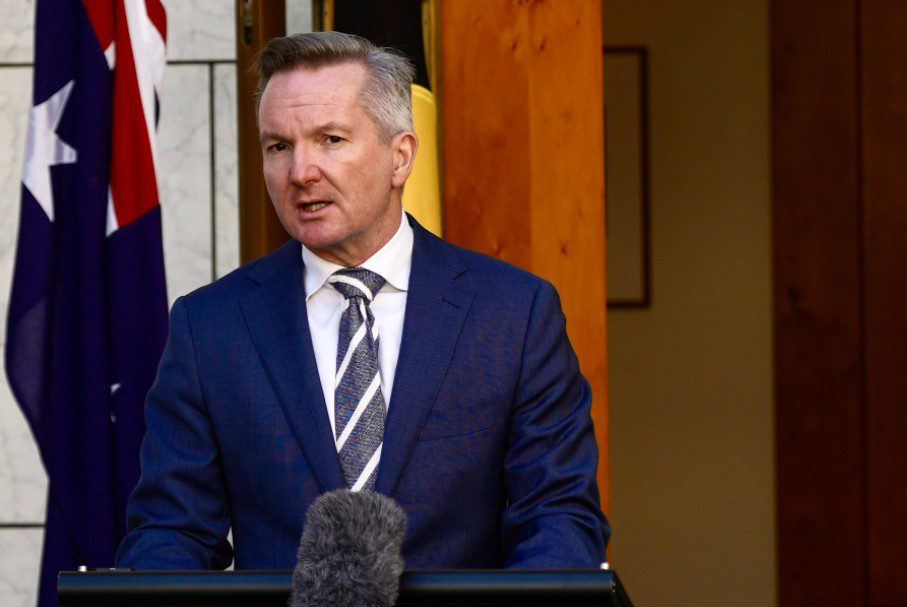
THE FEDERAL Government is prioritising diesel supplies for New South Wales farmers as seeding commences, according to Minister for Climate Change and Energy Chris Bowen.
Speaking at a press conference today, Mr Bowen confirmed that NSW continued to have the highest rate of service stations without diesel available, but this number was dropping.
He said 124 stations across the state were without diesel, one fewer than the previous day, representing about 5 percent of all sites.
By comparison, 40 stations in Victoria were without diesel, alongside four in South Australia, 30 in Queensland, four in the Northern Territory, seven in Tasmania, eight in Western Australia and four in the Australian Capital Territory.
“More work to do…until we get that number down to zero but we are continuing to deal with very high demand for diesel in particular,” Mr Bowen said.
“The supply chain in regional NSW in particular has been stretched as it’s sowing and seeding season in NSW and we have, with the industry, been prioritising getting diesel to farmers so they can get their crops into the ground.
“Nevertheless, good progress [but] more work to do to ensure that fuel gets to where it’s needed.”
Mr Bowen said the supply of diesel and petrol in the country remained “static” at 39 days.
He said this was despite “massive increases in demand” experienced, particularly for diesel.
Mr Bowen stated that “demand for petrol and diesel was 30 percent higher this Easter than last Easter”.
Asked why farmers were still facing delays accessing diesel despite stable supplies, Mr Bowen said stronger demand was driving the issue.
He said customers were drawing down 100pc of their bulk contract allocations, leaving less fuel available on the spot market.
He said the spot market “which predominates in regional Australia hasn’t been working as well”.
“The companies are legally obliged to meet their contracts to people who have contracted diesel in particular in advance.
“I have always recognised that that has meant some real challenges in regional Australia.
“I am pleased with this progress we are making because the fuel’s getting out to regional Australia and you are seeing more and more of those…spot markets being filled.”
In today’s event, Mr Bowen said fuel companies had reassured the government that all expected deliveries were on track.
“I’ve been in constant contact with the fuel companies, and I can confirm that there appears to be no cancellations of expected deliveries into Australia and they now have secured contracted supply well into May.”
Ceasefire announcement
Mr Bowen also commented on today’s announcement that the US and Iran had agreed to a two-week ceasefire with the potential for the Strait of Hormuz to be opened during that period.
US president Donald Trump was first to break the news with a statement that progress had been made on a possible long-lasting agreement.
“[S]ubject to the Islamic Republic of Iran agreeing to the complete, immediate, and safe opening of the Strait of Hormuz, I agree to suspend the bombing and attack of Iran for a period of two weeks,” Mr Trump said in a statement.
“We received a 10 point proposal from Iran, and believe it is a workable basis on which to negotiate.
“Almost all of the various points of past contention have been agree to between the United States and Iran, but a two-week period will allow the agreement to be finalised and consummated.”
This was followed by a statement from Iran’s Minister of Foreign Affairs Seyed Abbas Araghchi who showed support for the plan.
“If attacks against Iran are halted, our powerful armed forces will cease their defensive operations,” Mr Abbas Araghchi wrote in a statement.
“For a period of two weeks, safe passive through the Strait of Hormuz will be possible via co-ordination with Iran’s Armed Forces and with due consideration of technical limitations.”
Both parties are set to have negotiations on Friday.
During the press conference, Mr Bowen cautioned against optimism that the Strait of Hormuz had immediately reopened to shipping.
“Let’s not get ahead of ourselves.
“We welcome progress, but I don’t think we can say the Strait of Hormuz [is] now open.
“There is more work to be done.”
Prime Minister Anthony Albanese welcomed the agreement to negotiate a lasting resolution to the conflict.
“The Australian Government has been calling for de-escalation and an end to the conflict for some time now,” Mr Albanese said in a statement.
“Iran’s de-facto closure of the Strait of Hormuz, coupled with its attacks on commercial vessels, civilian infrastructure, and oil and gas facilities, is causing unprecedented energy supply shocks and impacting oil and fuel prices.
“We have been clear the longer the war goes on, the more significant the impact on the global economy will be, and the greater the human cost.
“Australia has been working with international partners in support of diplomatic efforts to reopen the Strait of Hormuz so critical supplies can flow to those who need it, including the most vulnerable.”
Grain Central: Get our free news straight to your inbox – Click here