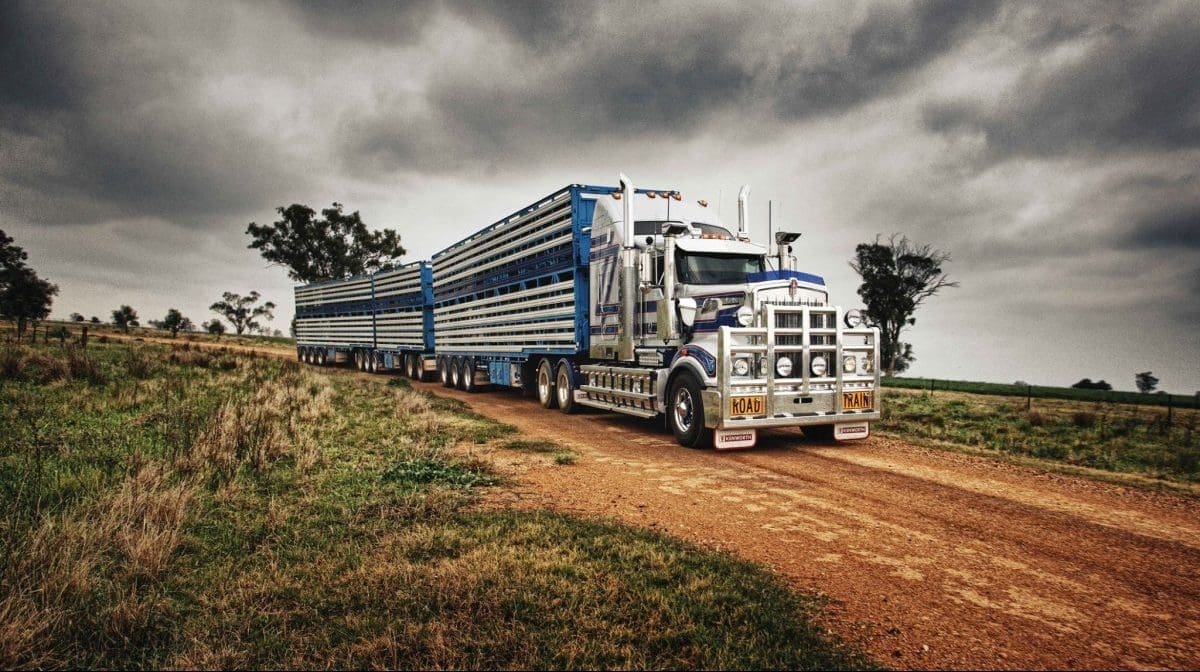
THE Australian Livestock and Rural Transporters Association has backed the Australian Trucking Association’s call for urgent fuel tax relief, after the national average retail diesel price increased by 15.9 cents per litre in just one week.
ALRTA President Gerard Johnson said the rapid increase was placing enormous pressure on the operators responsible for moving livestock, grain, fertiliser, fuel and food across Australia.
“Fuel is one of the largest operating costs for a rural transport business. An increase of almost 16 cents per litre in a week cannot simply be absorbed,” Mr Johnson said.
“These costs will move through the agricultural supply chain and ultimately affect farmers, processors, regional communities and Australian families at the supermarket.”
ALRTA stands with the Australian Trucking Association in support of the Coalition’s proposed Fuel Price Shield, which would automatically reduce fuel excise and temporarily reduce the Heavy Vehicle Road User Charge to zero when global oil prices remain above a defined threshold.
“The ATA is right to call for a predictable and automatic response to extreme oil price shocks,” Mr Johnson said.
“Earlier this year, the Federal Government demonstrated that it could act by reducing fuel excise, temporarily removing the Road User Charge and increasing fuel tax credits for heavy vehicle operators.
“We are asking the Government to revisit that relief immediately. The Coalition’s Fuel Price Shield provides one possible model. Whether the Government adopts that proposal or develops its own mechanism, doing nothing should not be the answer.”
Mr Johnson said temporary financial relief must be accompanied by immediate productivity reforms to reduce the amount of diesel required to move Australia’s agricultural freight.
“While the immediate national discussion is rightly focused on fuel-tax relief, the response cannot end in Canberra. State governments also control many of the vehicle-access and road-network decisions that determine how efficiently agricultural freight moves,” Mr Johnson said.
“If fuel costs more, every level of government must help operators use every litre as productively as possible.”
“There has never been a more compelling time for states to approve safe access for higher-productivity vehicles. Moving more freight with fewer truck movements would reduce diesel use, unnecessary detours and the splitting of combinations, while easing pressure on drivers, regional roads and the broader supply chain.”
ALRTA is also calling on the Federal Government to prioritise an Australian Agricultural Freight Network and work with state governments to fast-track longstanding productivity proposals identified in the ALRTA National Livestock and Rural Freight Productivity Roadmap.
Immediate priorities include:
- Queensland: activate higher-productivity livestock access on validated Southeast Queensland processing corridors, including connections to major processors and feedlots.
- Queensland: reassess Rockhampton road-train access and operating-hour restrictions that can require combinations to be split, creating additional trips, delays and fuel use.
- New South Wales: progress 36.5-metre livestock freight corridors, including Gunnedah and Tamworth to Newcastle, Singleton and Quirindi; Dubbo to Dunedoo; Wagga Wagga to Albury; and key NSW-Victoria border crossings.
- New South Wales: assess higher-productivity access on western corridors, including Bourke to Dubbo, Bourke to the South Australian border, Goondiwindi to Moree, and Hay to Mildura and Broken Hill.
- Victoria: progress the Mildura–Portland agricultural freight corridor for livestock, grain, fertiliser, fuel and export freight.
- Victoria: assess a 42-metre freight corridor from Heywood through Warrnambool, Colac, Geelong and Corio, connecting important processing, port, grain and fuel facilities.
- New South Wales and Victoria: harmonise vehicle and access arrangements across state borders so safe and compliant vehicles are not forced to reduce payloads, split combinations or navigate duplicated approval processes.
“These proposals are already on the table. Governments should now approve controlled pilots and route assessments and move quickly to implementation wherever safety and infrastructure requirements can be satisfied,” Mr Johnson said.
“This is not about weakening safety or infrastructure protections. It is about using existing notices, permits, higher productivity vehicles, Higher Mass Limits and telematics more effectively.”
Mr Johnson said the fuel-price crisis was also a national food-security issue requiring cooperation across all levels of government.
“Many Australians may never see the work of a livestock or rural transporter, yet every Australian depends on it,” he said.
“Our operators connect farms with saleyards, feedlots, processors, ports and supermarkets. When their fuel costs rise sharply and inefficient access rules require extra trips, the consequences reach far beyond the transport industry.
“We need immediate fuel relief, but we must also address the productivity constraints that make Australia’s food and agricultural supply chains more expensive and less resilient than they need to be.
“Now is the time for the Commonwealth and the states to prioritise the Australian agricultural freight network and approve the practical reforms industry has been requesting.”
Source: ALRTA