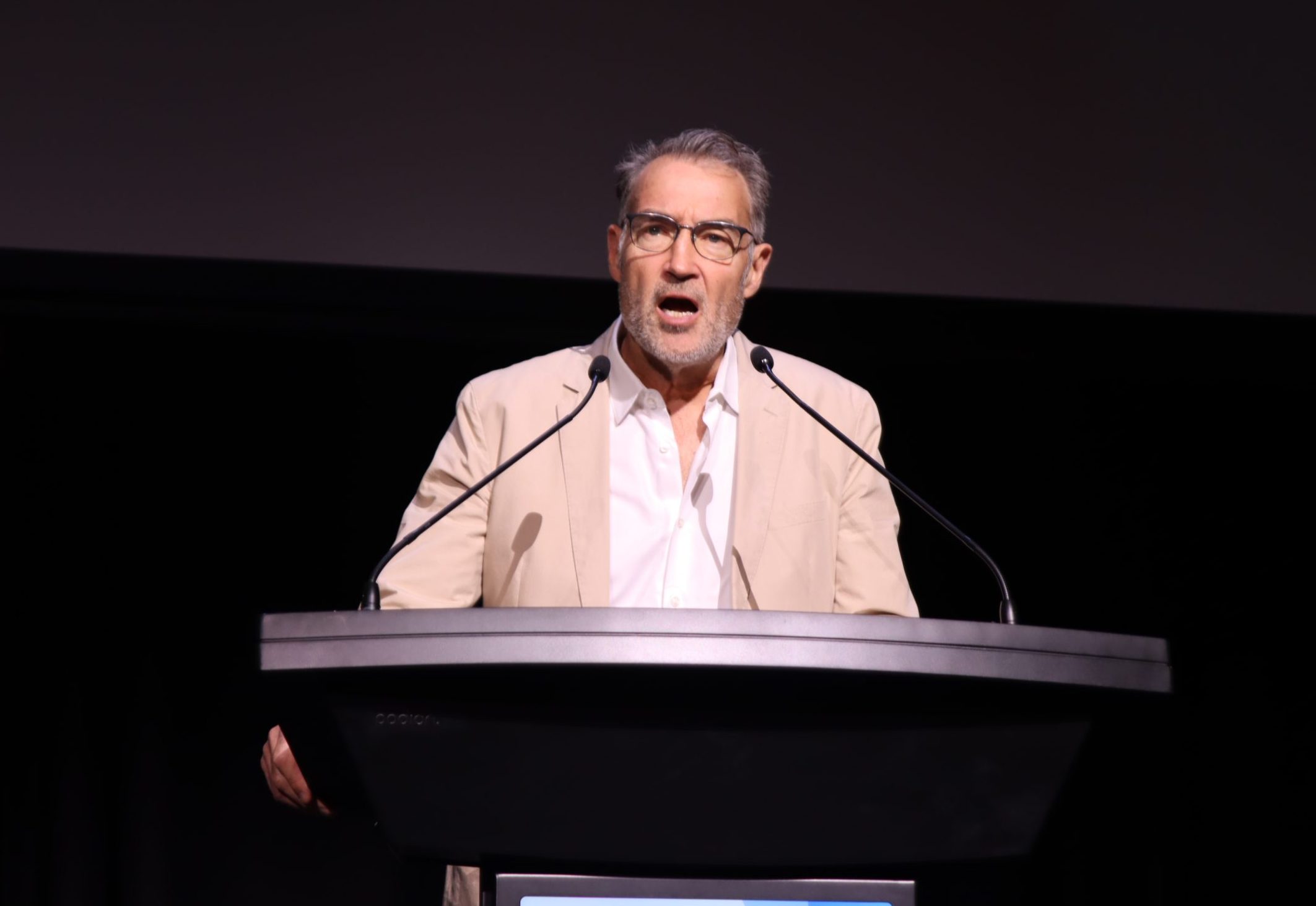
A prominent Australian surgeon has blasted what he terms as weak, flawed and fraudulent science underpinning studies used to declare meat a cancer risk and to advocate severely meat-restricted diets in dietary guidelines.
Former Australian of the Year Dr James Muecke said he saw the devastating consequences of flawed and fraudulent studies in his 35 years as an eye surgeon.
He attributed the rise of type 2 diabetes in large part to the propagation of “weak science by conflicted or misinformed entities, and the failure of our governments to reign in the devious and predatory behaviour of the ultra-processed food and sugary drinks industries”.
Unlike ultra-processed products, red meat was satiating and difficult to overeat, he said.
“It’s also nutritious and replete with protein, micro-nutrients, and other beneficial and highly bioavailable compounds, especially vitamin B12, zinc and iron.
“Red meat is critical to the health of millions, if not billions, of people worldwide.
“The current narrative of discouraging red meat consumption risks increasing poor health outcomes, especially if people turn to, or are directed to, industrially created ultra-processed and synthetic substances which are often brimming with metabolism disrupting components and lacking in many essential micronutrients.”
Addressing the Societal Role of Meat conference in Geelong this week, Dr Muecke, who has no affiliation with the meat industry, said the claim red meat is bad for human health is “a tale not grounded in solid science” but one driven by religious ideology, medical evangelism, corporate greed and conflicts of interest.
Cancer risk evidence challenged
He directly challenged the scientific basis of the International Agency for Research on Cancer’s (IARC) 2015 classification of unprocessed red meat as “probably carcinogenic to humans”, arguing that the available evidence did not establish a clear causal relationship.
Red meat got a bad rap when it came to cancer, he said.
Bowel cancer was the most frequently cited adverse health outcome, but of the observational studies that showed an association between unprocessed red meat and bowel cancer, the highest relative risk was 1.17.
“This is well below the 2.0 level required to attribute the correlation to causation,” he said.
“There’s a greater risk of developing bowel cancer just from being male.”
He said most observational studies took no account of the differences between a home-cooked steak with fresh vegetables and a glass of water on one hand, and a takeaway burger wrapped in a sugary bun and drizzled in sweet sauce, with a soft drink and serve of fries cooked in seed oils on the other.
“When close to half the calories in the diet of Australians come from the relatively recent and growing consumption of ultra-processed and fast food, how can the blame for any disease be pinned on the ancient but declining consumption of red meat?”
In 2015, IARC, an agency of the World Health Organisation, classified red meat as probably carcinogenic to humans and processed meat as carcinogenic to humans.
Dr Muecke said this suggested the classification was underpinned by “convincing evidence”.
However, he pointed out the Working Group had considered over 800 studies regarding red meat and cancer, but had based their findings however on 56 observational studies and six Randomised Controlled Trials (RCTs), and all of these studies related solely to bowel cancer.
Of the 29 unprocessed meat studies, less than half found a link to cancer.
Of the 27 processed meat studies, only two thirds found a link.
“This is not convincing evidence. There is no certainty here,” he said.
Of the six RCTs which suggested a link between red meat and bowel cancer, only two were conducted solely on humans.
“And both were small and poorly designed,” Dr Muecke said.
“Four of the studies were conducted on rats, and the rats were injected with powerful cancer-causing chemicals prior to being fed the meat.
“Two flawed experimental studies out of a total of 800 are central to the IARC’s advice that red meat causes cancer in humans.
“I do like Dr Georgia Ede’s summary: “These studies are inconclusive at best, and worthless at worst.”
Dr Muckey described himself as a “a deeply concerned omnivore”.
“I’m concerned because we’re constantly being told that red meat is bad for human health. That it can cause a litany of diseases… heart attack, dementia, stroke, cancer, type 2 diabetes. The top killers in our society,” he said.
“We read about it in the media. We hear about it from our doctors. We learn about it from patient advocacy groups… Heart Foundation Australia, Dementia Australia, Stroke Foundation, Cancer Australia, Diabetes Australia, just to name a few.
“And the narrative that ‘red meat is bad for human health’ is cemented as policy in our Australian Guide to Healthy Eating, which has been discouraging us from eating red meat for over 13 years.
“You’d have trouble even finding examples of red meat in this far-reaching document.
“And the food guide for Aboriginal and Torres Strait Islanders has been used by our various governments to discourage First Nations People from consuming their ancestral diet, one that was rich in red meat.”
Where anti-meat narrative began
Dr Muecke said the idea that red meat is bad for human health dated to the middle of the 19th century and was championed by Ellen G White, co-founder of the Seventh-day Adventist Church, who claimed to have seen thousands of visions from God revealing meat as a cause of cancer and encouraging a diet rich in fruits, nuts and seeds.
Ellen White was later associated with the establishment of the Sanitarium Health Food Company, now a major food company in Australia and New Zealand manufacturing more than 400 processed plant-based food products which are exported to over 40 countries.
Sanitarium is today a not-for-profit, legally registered charity wholly owned and operated by the Seventh-day Adventist Church, which is the second largest educational body in the world and an advocate of plant-based diets.
Dr Muecke said the Seventh-day Adventist Church helped to shape the thinking behind Australia’s Dietary Guidelines through its funding support of the Dietitians Association of Australia (now Dietitians Australia) which played a prominent role in the creation of the document from 2009 until its publication in 2013. (In October 2018, after facing public criticism over perceived conflicts of interests, the DAA announced it was terminating all corporate sponsorship programs with food manufacturers).
“The idea that red meat is bad for human health has been captured and promulgated by many entities beyond the Seventh-Day Adventist Church,” Dr Muecke said.
“Entities with profit-based motives, particularly the plant-based ultra-processed ‘food’ and fake meat industries, who both benefit enormously from the narrative that ‘plant-based is better for human health’ and entities with ideological motives espousing the narrative that ‘plant-based is better for the environment’.”
Issues with nutrition research
The case against red meat came down to ‘non-science’, Dr Muecke said, arguing that nutrition science or epidemiology was often weak and subject to manipulation, from the design of studies and analysis of results to the conclusions drawn and their communication to the public.
“So many layers. So many opportunities for corruption. And most of us are completely unaware.
He cited psychiatrist Dr Georgia Ede, who has argued that the shortcomings of nutritional epidemiology are often poorly understood by journalists, clinicians and policymakers, allowing uncertain findings to become amplified in media headlines and dietary guidelines.
He underlined this point with several examples.
Randomised controlled trials are considered the gold standard of nutrition epidemiology but they’re expensive and take a long time to conduct, resulting in researchers often relying on funding from sources that could introduce bias into results.
Observational studies were more common but are “mired with flaws” and could not control for potential confounding variables such as smoking, alcohol or physical inactivity, and are also subject to various biases. The biases inherent in observational studies could easily account for the associations discovered, and these associations were often weak.
In one study Young and Karr from the National Institute of Statistical Sciences in the US tested 52 observational claims in 12 clinical trials and found that all the claims failed to be replicated. Five replicated in the opposite direction.
They concluded: “There is now enough evidence to say what many have long thought: that any claim coming from an observational study is most likely to be wrong – wrong in the sense that it will not replicate if tested rigorously”.
“And yet, these flawed studies with their flawed claims are used time and time again to perpetuate the narrative that ‘red meat is bad for human health’.”
Cherry-picking data and conflicts of interest
Beyond weak science, Dr Muecke said other concerning issues which further eroded trust in the science included cherry picking of data, flawed peer reviews, conflicts of interest, burying of study data, institutional accountability and the spread of misinformation.
As one example of cherry-picked data, he pointed to the Blue Zones, five regions identified as having unusually high numbers of people living beyond 100 years of age.
“One of the many problems related to this flawed concept is that none of the centenarians were vegetarian or vegan. And they left out Hong Kong. This country of 7.5 million people has the highest life expectancy in the world, and yet they eat the most meat.”
Highlighting the number of flawed and fraudulent studies that were being churned out under a prevailing reward system in academia that he said rewarded quantity over quality, Dr Muecke pointed to a recent analysis in Nature magazine revealed that “more than 10,000 research papers were retracted” in 2023 alone, despite the fact they’d undergone peer review.
“With their dissemination comes the spread of misinformation, and the potential to cause immense harm.”
In another example of cherry-picked data, he cited a Health Foundation of Australia communication stating that “eating too much red meat increases your risk of heart disease”.
The ‘evidence’ used to support the statement was a report the foundation commissioned from the Sax Institute in 2018. However, Dr Muecke said that report concluded that “evidence identified in this report indicates that red meat intake does not appear to be associated with the risk of coronary heart disease”.
“This is completely at odds with the advice scattered through the Foundation’s website.”
Industry urged to counter misinformation
Dr Muecke urged the red meat industry to do more to promote the benefits for red meat consumption.
“Sadly, the red meat industry is losing the public relations battle to ideologically and financially conflicted entities. You need to hire the best PR agencies in each country to help counter the spread of misinformation by practitioners, public health bodies and the media.
“For the sake of your industry. For the sake of human health. For the sake of humanity.
“In the meantime, just eat real food and don’t be afraid of red meat.”